
Skip to content
John the Gate Man, gate automation specialist in Leyland, Lancashire
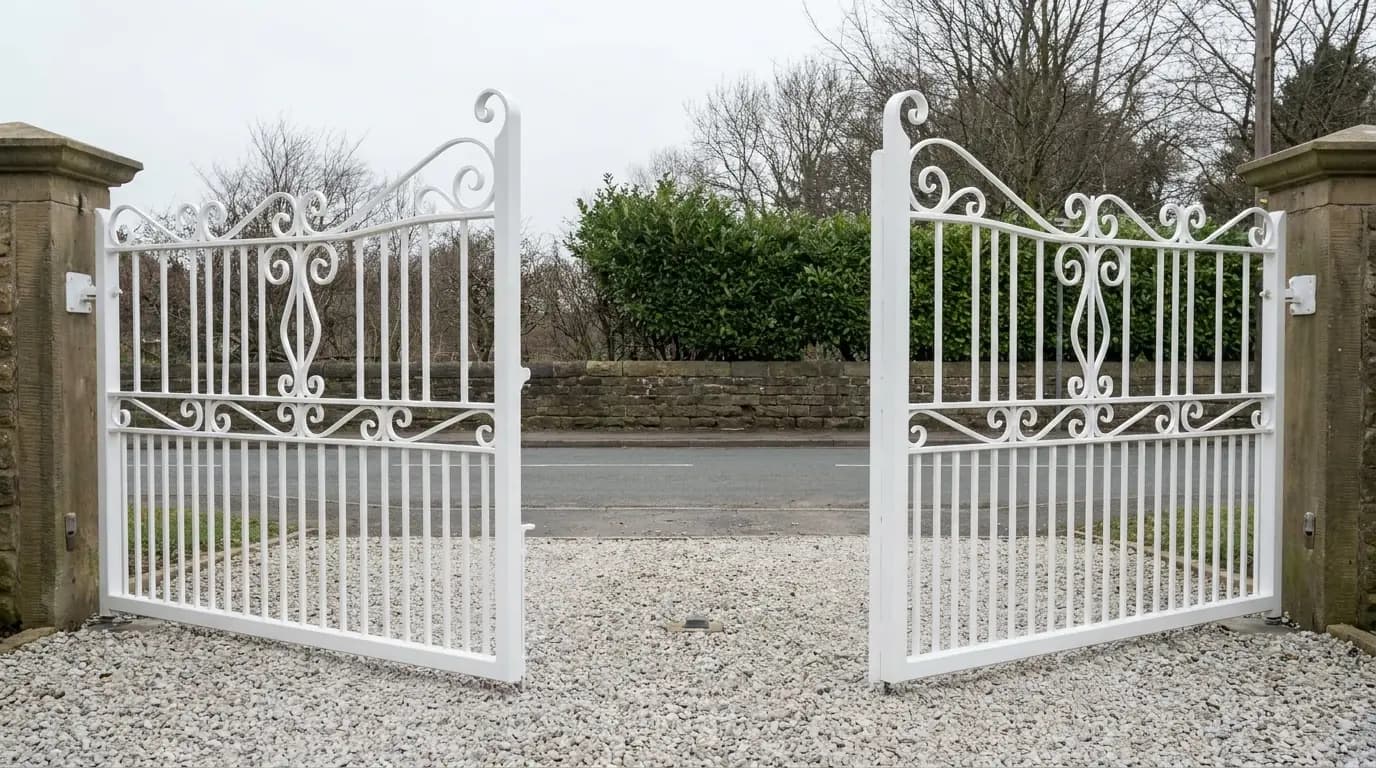
Automated driveway gates of the kind installed and serviced across Lancashire

Lancashire service area

Gate Automation in Lancaster

Gate automation in Lancaster runs into heritage constraints more often than in most Lancashire towns. This is a historic city with a large listed building stock and a district holding 39 conservation areas, from the Georgian streets below the castle to the stone villages strung along the Lune Valley. On a listed property, or within its curtilage, a new gate needs listed building consent no matter how low it is, so the sequence has to be consent first and hardware second rather than the other way round.

The stock splits fairly cleanly. In the city itself, gates are stone pillars, narrow openings, setts and paving, and very little room to swing. Out towards Halton, Caton, Hornby and the Lune Valley the pattern flips to long rural driveways, timber field gates, five bar entrances and cattle grids, where the constraints are cable distance and exposure rather than space. The two need different specifications even though they are the same council area.

The compliance side is fixed regardless of which end of the district a gate is on. A powered gate is machinery under UK law, so it needs a risk assessment, safety devices that prevent it trapping or crushing, and force testing to the limits in BS EN 12453. Heritage consent and safety compliance are separate requirements and satisfying one does not remove the other.

Gate questions in Lancaster

Do I need listed building consent for gates in Lancaster?
Yes, if the property is listed or the gate sits within the curtilage of a listed building, consent is required regardless of the gate's height. That is separate from planning permission and can be needed even where the gate would otherwise be permitted development. Lancaster City Council's conservation team deals with both, and the district has a large listed building stock.
How many conservation areas are there in the Lancaster district?
Lancaster City Council lists 39 conservation areas across the district, taking in the city centre, coastal areas and numerous Lune Valley villages. Inside those boundaries permitted development rights for gates, walls and fences can be restricted, and demolishing an existing boundary can need consent. The council publishes the boundary maps and appraisals for each one.
Can gates be automated on historic stone pillars in Lancaster?
Often yes, but the pillar has to be assessed before any fixing is drilled, because a motorised gate applies repeated dynamic loading that hand operation never did. Many Lancaster pillars are solid stone without a modern foundation and rely on mass alone. Where the stonework should not be loaded or drilled, the usual approach is an independent steel post set behind the pillar to carry the gate, leaving the historic fabric untouched.
What suits a long rural driveway in the Lune Valley near Lancaster?
Long driveways favour a system where the cable run is planned properly from the start, usually armoured cable in duct back to the house, with an intercom or GSM entry unit so callers can be answered from indoors. Timber five bar gates on rural Lancaster entrances are light and suit ram arm motors well, but they twist over time and need a rigid frame to hold alignment. Where the run is genuinely impractical, a solar and battery system can work on a low use gate.
Can my existing Lancaster gates be automated?
Most sound gates can be automated, including older wrought iron pairs common on Lancaster's Georgian and Victorian properties. The checks are whether the leaves are rigid and square, whether the hinges are worn, and whether the pillar or post can carry the load. Iron gates are heavy, so the hanging arrangement is usually the deciding factor rather than the motor.
What affects the cost of gate automation in Lancaster?
Gate weight, motor type, cable distance and groundwork are the main variables, and in Lancaster heritage consent can add time before any of that starts. Underground motors are dearer to fit than pillar mounted arms because of excavation and drainage. A meaningful price needs the opening seen rather than described.
How long does a gate installation in Lancaster take?
One to two days on site is normal for automating sound existing gates. On a listed or conservation area property the constraint is usually consent rather than fitting time, and that has to be secured before work begins. Long rural cable runs in the Lune Valley add a day or more for trenching and ducting.
Are underground gate motors better for a Lancaster property?
Underground motors are worth considering where appearance matters, because the drive sits in a buried box and nothing is visible on the pillar, which suits conservation area and heritage settings. The trade off is cost, excavation and the need for proper drainage in the foundation box, since standing water is the common cause of failure. Pillar mounted ram arms are cheaper, easier to service and perfectly acceptable on most properties.
Does force testing apply to gates in a Lancaster conservation area?
Yes, safety law applies identically inside and outside a conservation area. A powered gate is machinery, so it must be risk assessed, fitted with appropriate photocells or safety edges, and force tested to the limits in BS EN 12453. Heritage consent governs appearance and fabric, not safety, and neither substitutes for the other.
How often should an automatic gate in Lancaster be serviced?
Once a year for a normal domestic gate. The service covers hinges, bearings, rack and rollers, photocell alignment, safety edge condition, water ingress in the control enclosure, and a repeat force test. Exposed rural entrances west and north of Lancaster take more weather than a sheltered city plot, so those tend to need attention sooner.

Gate work in Lancaster?

Call 07768 314082 to talk it through, or send the details and get a call back.

Call nowQuote