
Skip to content
John the Gate Man, gate automation specialist in Leyland, Lancashire
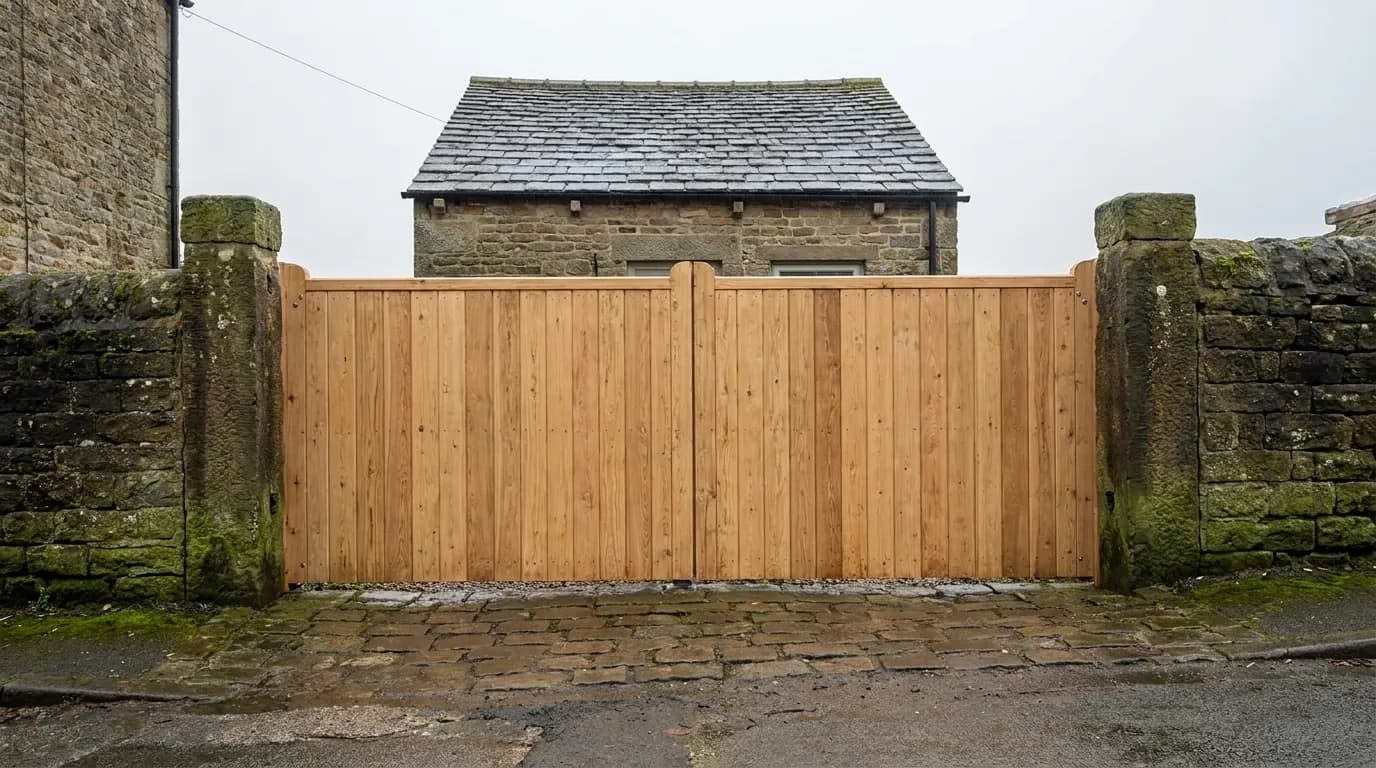
Automated driveway gates of the kind installed and serviced across Cumbria

Cumbria service area

Gate Automation in Ambleside

Gate automation in Ambleside means fitting motors, controls and safety equipment to driveway gates in a town of slate walls, narrow lanes and steep ground. A conservation area covers much of the centre, and Ambleside sits inside the Lake District National Park, which makes the National Park Authority the planning authority rather than Westmorland and Furness Council. Neither Cumbria County Council nor South Lakeland District Council still exists, so older guidance about who to apply to is out of date. In practice the constraints here are usually physical before they are legal: how much room a gate has to swing, and how sharply the ground falls away from the road.

Space is the recurring problem. A pair of swing gates needs clear ground behind the leaves for the full sweep, and on a short drive coming straight off a narrow lane that ground often is not there. A sliding gate needs a run of clear space to one side instead. Which of those a property can offer is the first thing to establish, and it is settled by measuring rather than by looking at a photograph.

Ambleside is roughly seventy miles from the Leyland base. That is said plainly rather than hidden behind a claim of local cover, and it means jobs here are arranged in advance. It does not restrict what can be fitted, serviced or repaired.

Gate questions in Ambleside

Which authority handles planning for gates in Ambleside?
The Lake District National Park Authority is the planning authority for Ambleside, because the town lies inside the National Park. Westmorland and Furness Council is the unitary authority covering the area for other services. South Lakeland District Council and Cumbria County Council were abolished in April 2023 and no longer handle anything.
Does Ambleside conservation area status change what gate I can have?
It does not stop a gate being fitted or automated, but design, height and materials are looked at more carefully where permission is needed. Conservation area designation does not by itself remove permitted development rights for gates, though an Article 4 direction can. Traditional painted iron and timber generally sit better in the Ambleside street scene than large solid panels.
Do gates on Ambleside's narrow lanes have to open inwards?
A driveway gate should not swing out over a public footway or road, so on the narrow lanes around Ambleside gates are normally hung to open inwards or fitted as sliding gates instead. An outward swinging gate on a tight lane creates a hazard for passing traffic and pedestrians and can obstruct the highway. Where there is no room to swing inwards either, a sliding gate is usually the answer.
What suits a steep driveway in Ambleside, a swing gate or a sliding gate?
On steeply rising ground a sliding gate is often the better choice, because a swing gate has to clear ground that climbs away from it through the whole arc. Swing gates can work on a slope if the leaf is hung high enough or the ground behind is levelled, but that raises the gap under the gate. A sliding gate runs level along its track regardless of what the drive does beyond it.
My Ambleside property is listed. Can the gates still be automated?
Yes, listing does not prevent automation, but it removes permitted development rights and may bring listed building consent into play alongside planning permission. That applies to the gates and to anything within the curtilage of the listed building, including pillars and walls. It is worth resolving the consent position before gates are ordered rather than after.
Can old wrought iron gates in Ambleside be motorised?
Ornate wrought iron gates are usually good candidates for automation, because they are heavy but rigid and they let wind through rather than catching it. The limiting factor is nearly always the pillar or post rather than the gate itself. Old ironwork can also be repaired almost indefinitely, which is one reason it is often worth keeping and motorising rather than replacing.
How do motors fix to the slate and stone pillars common in Ambleside?
Ram arm motors bolt to the pillar using resin anchors set into sound stone, chosen and positioned to spread the load rather than working against a single course. Where the stonework is loose, weathered or only a facing over rubble fill, an underground motor with its own foundation avoids loading the pillar at all. The pillar condition is assessed at survey, because a motor will find any weakness in it.
How often should an automatic gate in Ambleside be serviced?
Once a year is the usual interval for a domestic automated gate, and the wet conditions common in the Lake District make the electrical side worth watching in particular. Water ingress into control enclosures, glands and cable joints is a routine cause of faults. Hinges, bearings and rack rollers also need cleaning and greasing to stop wear accelerating.
What safety equipment does an automated gate in Ambleside need?
At minimum a powered gate needs its closing forces limited and tested, plus devices such as photocells and safety edges to detect a person or vehicle in the gate's path. UK law treats a powered gate as machinery, and BS EN 12453 sets out the force limits it must meet. On an entrance opening straight onto a busy lane, the detection zones matter more, not less.
Is Ambleside covered, and how far is it from the Leyland base?
Ambleside is within the covered area and sits about seventy miles from the Leyland base. That distance is stated openly because it is a real drive, and an Ambleside visit is a planned one rather than a local callout. Call 07768 314082 to discuss a gate in Ambleside.

Gate work in Ambleside?

Call 07768 314082 to talk it through, or send the details and get a call back.

Call nowQuote